The Current State of Toronto’s Condo Market: A Buyer’s Golden Window
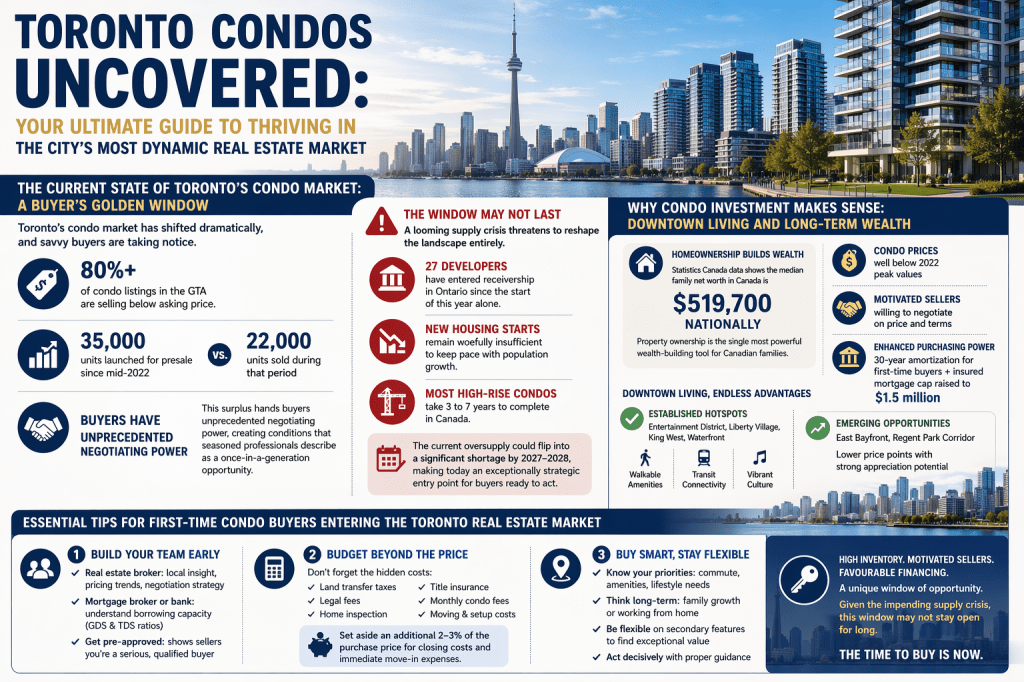
Toronto’s condo market has shifted dramatically, and savvy buyers are taking notice. Recent data confirms that over 80% of condo listings in the Greater Toronto Area are selling below asking price, a stark contrast to the frenzied bidding wars that defined the real estate market just a few years ago. Inventory levels have climbed significantly, with approximately 35,000 units launched for presale since mid-2022, yet only around 22,000 finding buyers during that period. This surplus hands buyers unprecedented negotiating power, creating conditions that seasoned professionals describe as a once-in-a-generation opportunity.
However, this buyer-friendly environment may not last. A looming supply crisis threatens to reshape the landscape entirely. Developer receiverships have spiked sharply in Ontario, with 27 developers entering receivership since the start of this year alone. Meanwhile, new housing starts remain woefully insufficient to keep pace with population growth, and most high-rise condos take three to seven years to complete in Canada. Consequently, the current oversupply could flip into a significant shortage by 2027-2028, making today’s Toronto condos market an exceptionally strategic entry point for those ready to act.
Why Condo Investment Makes Sense: Downtown Living and Long-Term Wealth
A condo investment in Toronto offers a compelling blend of lifestyle benefits and financial returns. Statistics Canada data reveals that homeownership remains the single most powerful wealth-building tool for Canadian families, with the median family net worth sitting at an impressive $519,700 nationally. Property ownership anchors this wealth, and condominiums provide an accessible entry point – particularly now, with prices sitting well below 2022 peak values and sellers willing to negotiate on both price and terms.
Downtown living amplifies these advantages considerably. Neighbourhoods such as the Entertainment District, Liberty Village, King West, and the Waterfront continue to attract young professionals and investors drawn to walkable amenities, transit connectivity, and vibrant cultural scenes. Meanwhile, emerging areas like East Bayfront and the revitalized Regent Park corridor offer lower price points with strong appreciation potential. The federal government’s recent expansion of 30-year amortization periods for first-time buyers and the raised insured mortgage cap to $1.5 million further enhance purchasing power, making previously out-of-reach units suddenly attainable.
Essential Tips for First-Time Condo Buyers Entering the Toronto Real Estate Market
First-time buyers should begin by assembling a strong professional team well before they start viewing properties. An experienced real estate broker provides invaluable insight into neighbourhood pricing trends and negotiation strategies, while a mortgage broker or bank representative helps you understand your borrowing capacity through GDS and TDS ratio calculations. Additionally, securing pre-approval early signals to sellers that you are a serious, qualified buyer – a distinct advantage in any real estate market.
Beyond the purchase price, budget carefully for hidden costs that can catch newcomers off guard. Land transfer taxes, legal fees, home inspection charges, title insurance, and monthly condo fees all add up quickly. Industry professionals recommend setting aside an additional two to three percent of the purchase price as a buffer for closing costs and immediate move-in expenses such as appliances that may not be included with the unit.
Finally, approach your search with clearly defined priorities but maintain flexibility on secondary features. Evaluate your commute requirements, proximity to amenities, and future lifestyle needs – particularly if you plan to grow your family or work remotely. In today’s market, buyers who act decisively with proper guidance are securing exceptional value. The combination of high inventory, motivated sellers, and favourable financing conditions creates a unique window that, given the impending supply crisis, may not remain open for long.

